
How Multi-Sensory Instruction Supports (and Reduces the Need for) Maths Tutoring
It's a conversation many parents and teachers have after another difficult maths lesson.
"We've explained it so many times."
"Maybe they need a maths tutor."
Sometimes they do.
Many students benefit enormously from working with a skilled tutor who can identify learning gaps and provide targeted support.
However, there are also many students who don't necessarily need more teaching time. They need different teaching.
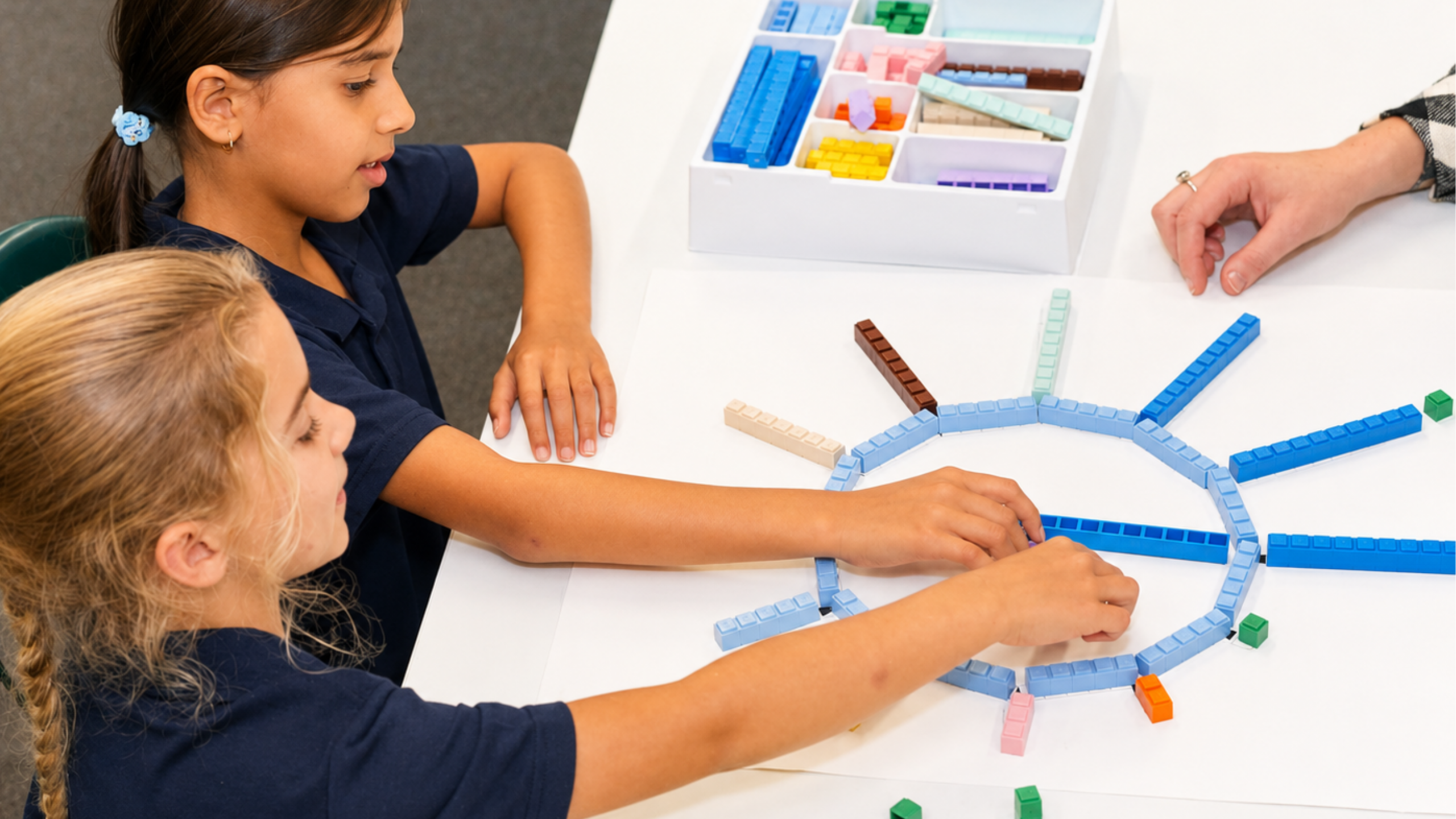
This is where multi sensory maths tutor support becomes an important consideration. When mathematics is taught using structured, multi-sensory methods that develop genuine understanding, many students become less dependent on ongoing tutoring because the learning itself begins to make sense.
The Goal Isn't More Tutoring. It's Better Learning.
Tutoring is often viewed as the solution when students begin falling behind.
But tutoring is simply one form of support.
Its effectiveness depends entirely on how mathematics is being taught.
If a student spends an extra hour each week practising procedures they don't yet understand, progress may remain slow regardless of how dedicated the tutor is.
On the other hand, when teaching develops strong conceptual understanding from the beginning, many students become increasingly independent learners.
The aim should never be creating long-term reliance on tutoring.
The aim should always be helping students understand mathematics well enough that they need less support over time.
Understanding Comes Before Memorisation
One of the most common reasons students struggle is that they have been asked to memorise procedures before they understand the mathematical ideas behind them.
A student may remember the steps for long division one week and forget them the next.
They may complete multiplication worksheets successfully but struggle to explain what multiplication actually represents.
Without understanding, procedures become difficult to retain and even harder to apply in unfamiliar situations.
Multi-sensory instruction addresses this problem by helping students build meaning before introducing abstract methods.
Instead of asking students to remember mathematics, it helps them understand it.
Multi-Sensory Instruction Makes Mathematics Visible
Mathematics is abstract.
Numbers, symbols and algorithms represent ideas that cannot always be seen.
For many learners, particularly those experiencing maths difficulties, this level of abstraction creates unnecessary barriers.
Multi-sensory teaching bridges that gap.
Students physically build quantities.
They compare groups.
They partition numbers.
They explore mathematical relationships using concrete materials before representing those ideas visually and eventually connecting them to written symbols.
Rather than moving immediately to pencil-and-paper procedures, students experience mathematics in ways they can see, touch, discuss and explain.
This progression gives abstract mathematics a meaningful foundation.
How the I-CRAVE Maths® Methodology Supports Lasting Learning
Within the I-CRAVE Maths® Methodology, learning follows a deliberate sequence designed to reduce confusion and strengthen understanding.
The process begins by Identifying what the student already knows and where learning gaps exist.
From there, concepts are introduced using Concrete materials that students can physically manipulate.
Students then create Representations through drawings, diagrams and visual models before progressing to Abstract symbols and written algorithms.
Throughout the learning process, students Verbalise their mathematical thinking while teachers provide Explicit instruction that carefully guides new learning.
Each stage builds upon the previous one.
Rather than relying on memory alone, students gradually develop connected mathematical understanding.
Whether this occurs in a classroom, homeschool environment or tutoring session, the learning pathway remains the same.
What This Looks Like in Practice
Imagine a student who has attended weekly tutoring for almost a year.
They can often complete the homework during the lesson but struggle again by the following week.
Their confidence remains low because every new topic feels unfamiliar.
Now imagine that same student beginning with a structured assessment to identify missing foundations.
Instead of immediately introducing new procedures, the teacher revisits place value using hands-on materials.
The student builds numbers with concrete resources, draws what they have built, explains their thinking aloud and gradually connects these experiences to written notation.
Within several weeks, something begins to change.
The student asks fewer questions.
They begin recognising patterns independently.
Mistakes become opportunities for reasoning rather than signs of failure.
Homework becomes less stressful because understanding is replacing memorisation.
The tutor has not become less important.
Instead, their role shifts from repeatedly reteaching forgotten procedures to extending genuine mathematical thinking.
Why This Reduces the Need for Ongoing Tutoring
Effective tutoring should build independence.
When students understand mathematical concepts deeply, they become increasingly capable of applying that understanding to new learning.
Parents often notice that their child requires less prompting.
Teachers observe greater confidence during class discussions.
Tutors spend less time reteaching previous content because students retain their learning more effectively.
This is why multi sensory maths tutor support can have such a significant long-term impact.
The objective is not to remove tutoring altogether.
Rather, it is to ensure that every tutoring session strengthens understanding in ways that reduce reliance on continual intervention.
Why This Approach Works
Research across cognitive science and the Science of Learning consistently shows that learning improves when new concepts are presented clearly, explicitly and in manageable stages.
Working memory has limited capacity.
When students are expected to remember procedures before understanding underlying concepts, cognitive load increases significantly.
Multi-sensory instruction reduces unnecessary cognitive load by making mathematical relationships visible.
Explicit instruction helps students focus their attention on the important mathematical ideas rather than trying to work out what each step means.
Response to Intervention (RTI) frameworks similarly emphasise identifying learning needs early and providing targeted support before misunderstandings become entrenched.
These principles are not separate from effective tutoring.
They are the foundation of it.
What Changes for Parents, Teachers and Tutors
One of the greatest benefits of multi-sensory mathematics instruction is the confidence it creates - not only for students, but also for the adults supporting them.
Parents become less anxious because they have a clear pathway for teaching concepts at home.
Teachers spend less time reteaching foundational skills and more time extending mathematical thinking.
Tutors gain greater clarity about where to begin and how to move students forward systematically.
The teaching becomes more consistent.
Learning becomes more predictable.
Guesswork is replaced with purposeful instruction.
Everyone understands why a concept is being taught, how it connects to previous learning, and what success looks like before moving on.
Mathematics Should Build Independence
The best maths tutoring is not measured by how long a student continues attending sessions.
It is measured by how confidently that student eventually works without them.
When students build understanding through carefully sequenced, multi-sensory instruction, they develop more than mathematical skills.
They develop confidence.
They become independent problem-solvers.
They begin to trust their own thinking.
Whether learning takes place at school, during tutoring or at home, mathematics should never feel like a collection of rules that simply need to be memorised.
It should make sense.
When teaching is explicit, structured and grounded in understanding, students require less reteaching because they have built knowledge that lasts.
Ready for maths to make more sense?
If your child is struggling with maths, the answer may not be more worksheets or more tutoring. They may need a more structured way to build the understanding underneath it.
Brighter Maths is Maths Australia’s multi-sensory maths program for home educators and families, helping children build strong mathematical foundations through explicit, hands-on learning and the I-CRAVE Maths® Methodology.
With a clear, mastery-based sequence, Brighter Maths helps you identify learning gaps, teach concepts for genuine understanding and support your child to become a more confident, independent maths learner.
Explore Brighter Maths.